Breaking news yesterday, reported the death of author Jeffrey Archer who died unexpectedly at his home.
Archer had had a very successful career as a novelist, short story writer and playwright. He was a master storyteller. From Not a Penny More, Not a Penny Less (published in 1976) he churned out a succession of novels selling more than 300 million books in over 100 countries. His 500+ page tome Kane & Abel (1979) is a compelling read and stands as one of the best selling books in the world with over 30 million copies.
Sadly there was downside to his career. Having been a Conservative MP from 1969 until 1974, he was then bankrupted, followed by a period of mixed fortunes. He was knighted in 1992, but in 2001 he was sentenced to 4 years in prison for perjury, being released in 2003.
His novels revived his career. But despite his obvious commercial success there has always been criticism of his writing style, implying a lack of depth at times and that he simply ‘churned out’ his books. In fact he was fastidious in his craft, producing draft after draft until he was satisfied with the result. He published 42 works translated in over 30 languages.
Yesterday he had spent time signing copies of his books, for hundreds of fans at the Leicester Square Theatre, alongside broadcaster Gyles Brandreth.
Tragically, his latest and, he had decided, his final book, Adam & Eve (Harper Collins) was published today 6 October. Jeffrey Archer died ‘suddenly and peacefully’ at his home on 5 October. He was 86.
Comments Off on Novelist & politician Jeffrey Archer dies day before book launch.
At some point I’m sure we’ve all wondered into a bookstore (or stumbled upon one on line) and found a lovely book we’d like to own. But it’s not essential/important or even affordable perhaps.
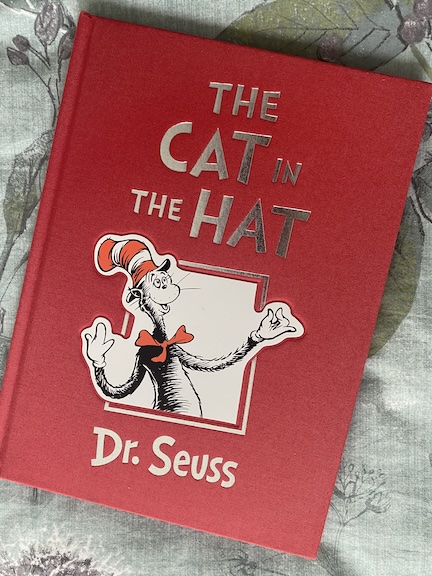
So, as part of a time-killing ramble around St Pancras station, in London, I came across this wonderful copy of The Cat in the Hat by Dr.Seuss. Specially bound for Hatchards* and limited to a numbered run of 2000 copies. So I just had to have a copy.
Having refiled through as many copies as I could, without altering their security, I managed to get the lowest number I could find. It was specially bound and numbered, Hatchards weren’t giving it away. I justified the spend by recalling that I had only got the paperback after all!
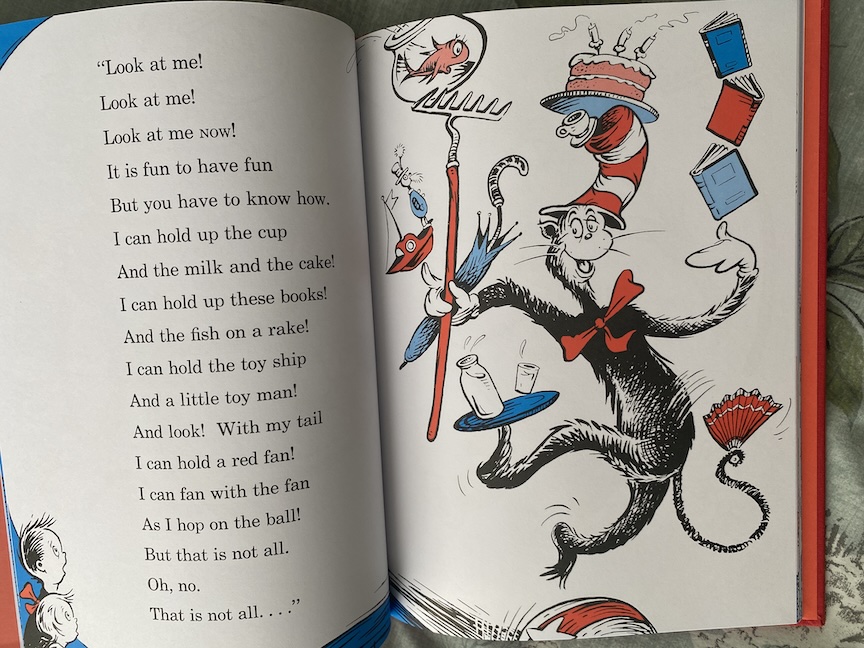
The Cat in the Hat was written and illustrated by Theodor “Dr. Seuss” Geisel in 1957. I won’t summarise the story but the cover pretty much gives the theme away. With its sporty red bow tie and matching top hat, our anthropomorphic friend shows up one wet day and creates mayhem for Sally, and her brother, while their mother is out.
Beautifully illustrated it’s published by Harper Collins.
* Hatchards is the oldest bookshop in the United Kingdom. Established by John Hatchard in 1797,
Comments Off on Didn’t need it. Couldn’t afford it. Bought it anyway!
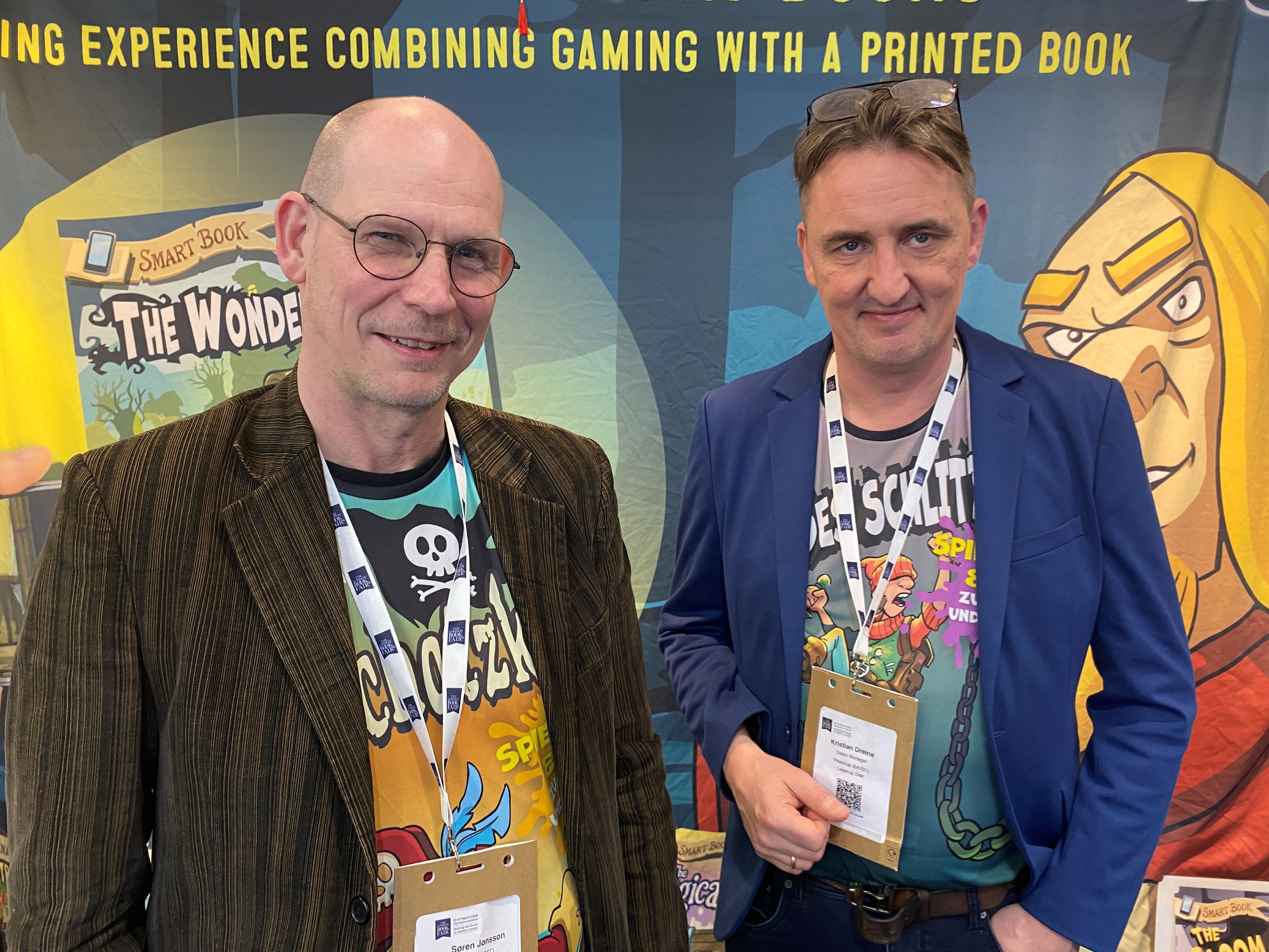
During my visit to the 2025 London Book fair I can across a very small stand located at the rear of the main hall. The company was Peasoup and it was manned by two Danish guys, Soren Jonsson and Kristian Dreino – perhaps two of the nicest people you would wish to meet.
Soren Jonsson & Kristian Dreino
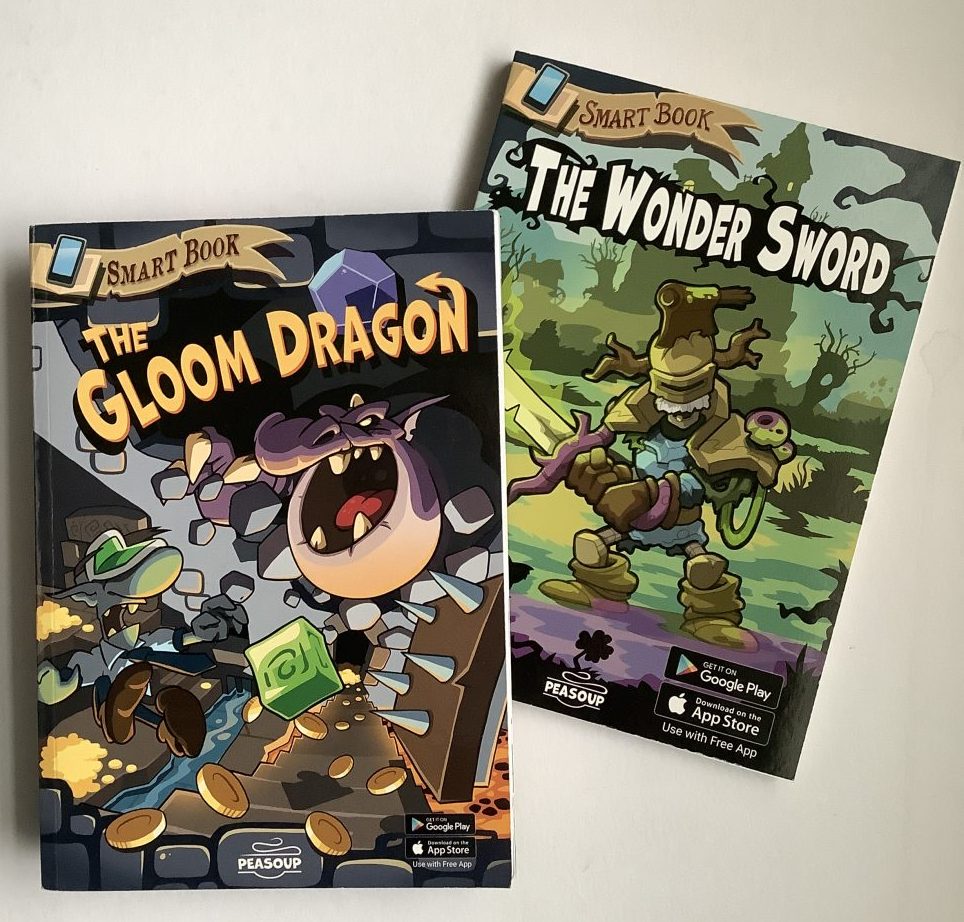
They were promoting their colourful game books, but game books with a difference. Maybe you recall the type of book (usual a handy size paperback) were you are given a persona, or could choose one, before setting out on a quest.
I remember my first ones were I had to choose a page number to visit. There I would be given a task to complete, or a decision to be made. Whichever I chose I would suffer the inevitable dire, and usually fatal, consequences!
Peasoup’s books are different. They feature Augmented Reality (AR), a technology that integrates computer-generated content, such as video or audio, into the reader’s environment, in real time. Not to be confused with VR (virtual reality) which is a fully digital. With the Peasoup books, this is achieved via an easy down-loadable app.
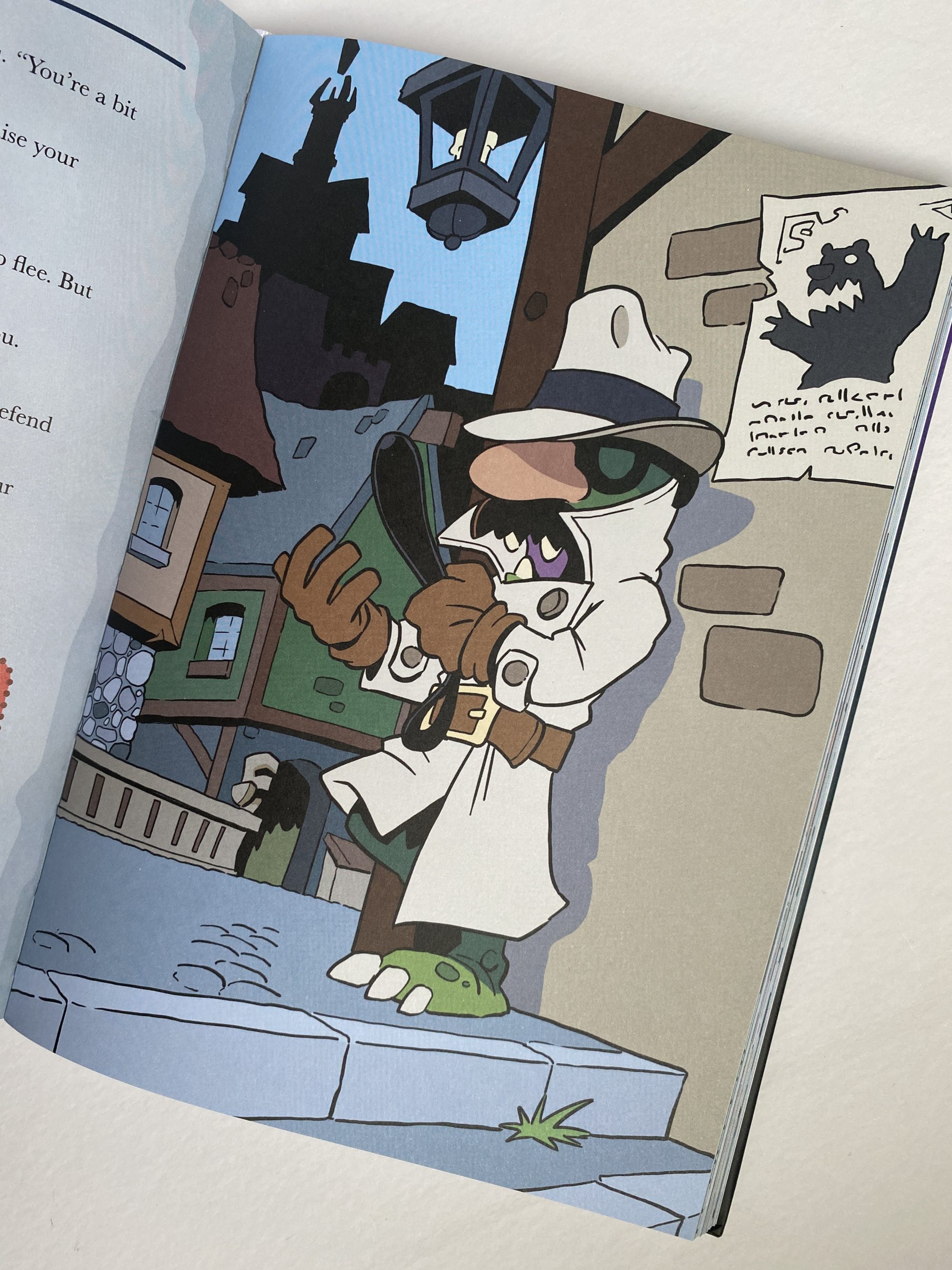
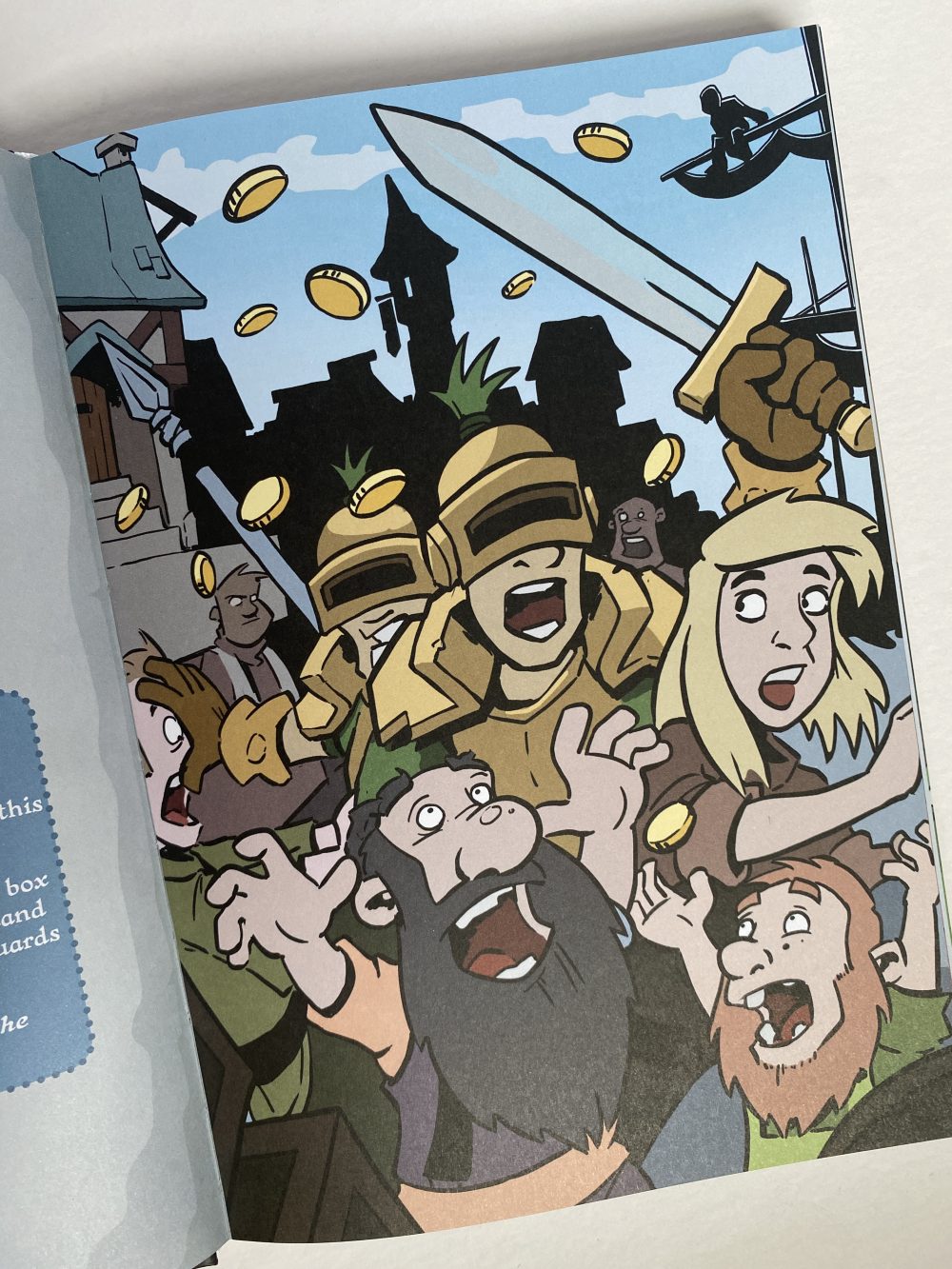
So the reader starts the adventure, visits the designated page where they find a scannable illustration. Here they use their smartphone camera via the app to discover what awaits them. Each book has its own app from eithe Google Play or the App Store.
My first copy of the the books (pictured right) featured fold-down covers, so the book would lie flat. This was a great help with the phone – although this facility singularly failed to prevent me from getting wasted by the waiting ogre, in a very short time!
Peasoup began 7 years ago, but the team behind it have been involved with computer games design for younger players for over 25 years. Illiteracy is a growing problem among children (just look at the figures in the UK), so innovation is needed to motivate reluctant readers at school and home. They discovered that children in the 10-14 years range, in Denmark, were reading less and less. The link between the traditional fantasy games and AR meant the images could divert reader’s attention and the books would provide more experience of reading and maths – making it more fun.
Danish children liked the books. Slow readers in the 8-10 group, who find it hard, can scan the text too. While small game elements can help kids be in their own space, such as with autism sufferers, which keeps them reading.
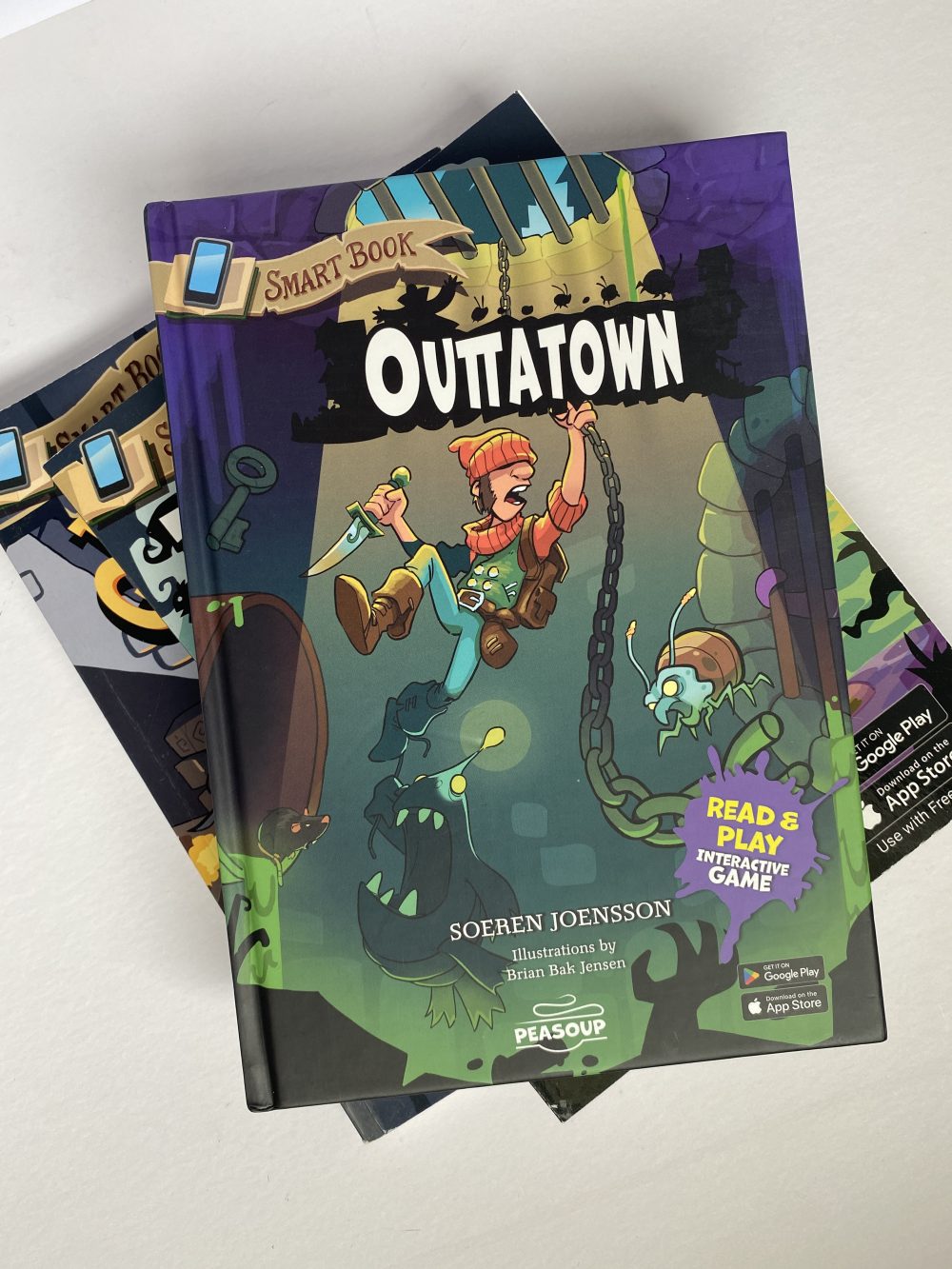
At this years’ London Book Fair, I found the same stand and the same two guys, this time with a spectacular new book in the series, Outtatown. Written by Soren Jonsson and lavishly illustrated by Brian Bak Jensen, it’s a standalone book, like the rest of the series. Readers, in this case aged 9+, need the Outtatown app too – this can’t be used alone.
“In Outtatown, you join a secret society of daring and resourceful adventurers calles the Tricksters. Use your street savvy and take daring risks to free the city of Outtatown from the reign of the terrible Bug King, who controls the minds of his innocent citizens..”
A report in Denmark suggests that: ‘the books can be used either with a single child or in a group, both ways work with no problems at all, and there is no better way of reading to book. It is excellent for all who can read. That’s why it is difficult to put a age group on the book, simply because the difference between children who are good at reading is really big in the 7-10 year age group. But when the children are reading in a group, they read together, and the best skilled child reads and that creates a dynamic group’.
They summarised by saying that the reading experience is for everyone who appreciates the “Choose your own adventure” genre, and is really genuinely fun – even for the adult co-reader.
Peasoup can be found at at www.peasoup.dk. More plans are in the pipeline to extend the range of titles which I’ll be covering in due course.