Tag Archives: poetry

From A Distant Observer

At the recent LBF2026, I was introduced to poet Alan Price, who kindly presented me with a copy of his new collection Evidence of War – A Response to Gaza. Not a critique of the participants, as you might expect, but a beautifully crafted observation of the daily plight of tens of thousands of human beings.
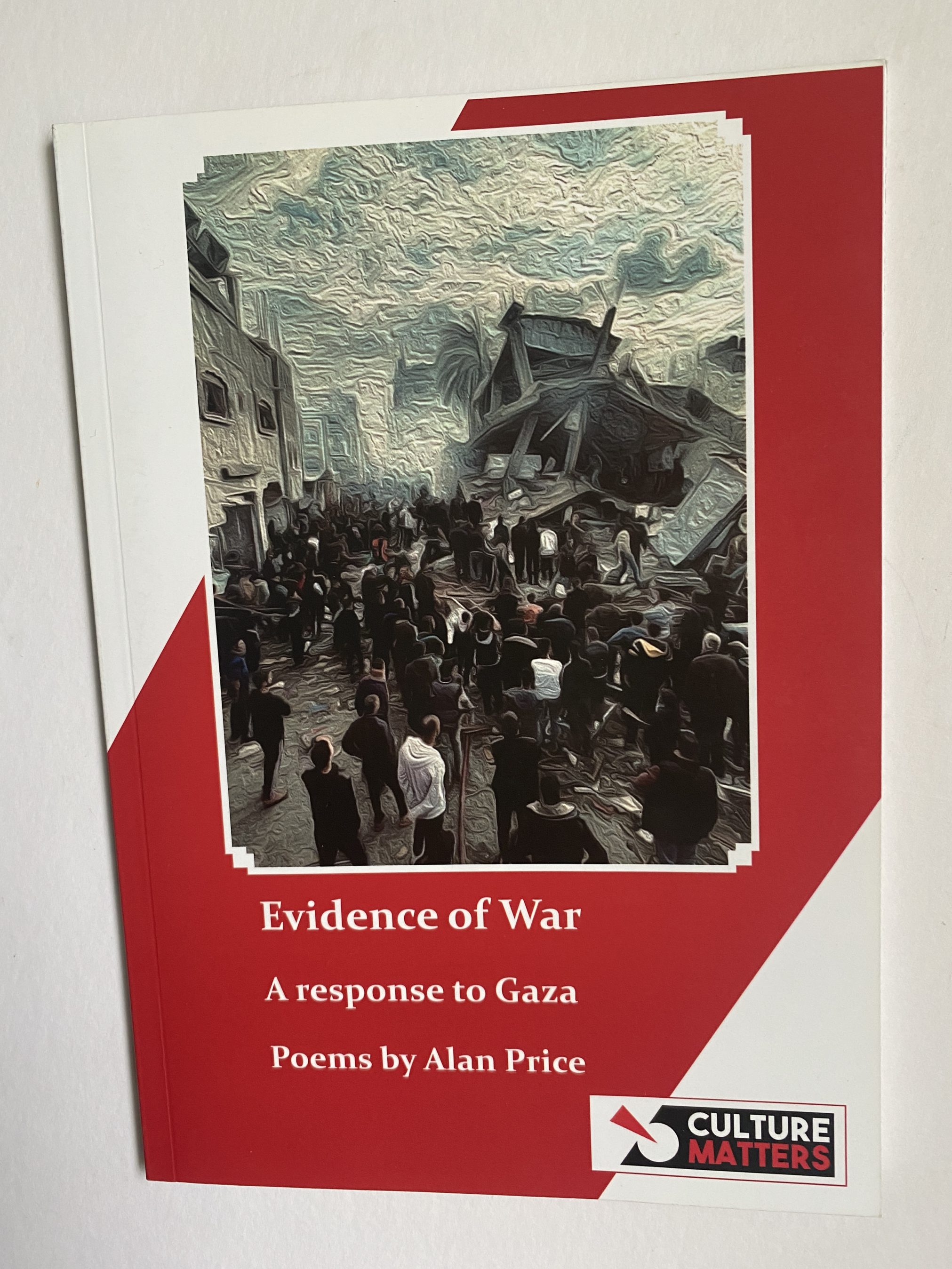
In his introduction, Price says his Gaza poem Deliverance was written when he heard the news, in February 2025, that Donald Trump and Benjamin Netanyahu had concocted a real estate plan for the rebuilding of Gaza. ‘For me the creation of a “Riviera of the Middle East” was a disturbing idea. I thought Deliverance would be a one-off poem for Gaza, but when a state of famine was officially declared and midsummer brought daily TV and radio accounts of the terrible conditions people were enduring. then I began to write a series of responses to the war.’ he says.

The result is a collection of 17 poems. His aim, not to accuse or criticise the main protagonists or their powerful allies – or even mention them by name, but to ‘try and reach out and use words to empathise, as a very distant observer, with the cruel plight of civilians being systematically starved and bombed’.

In his principle poem Deliverance the residents of ‘Hotel Humane’ are protected form the disturbing scenes outside:

‘You have enough to eat and drink and watch screens. /Still, these complaints. What’s the cause of your gripe?/ Oh, the real view is disturbing. No matter. Our concern. /We will draw down the blinds on shattered windows. /At Hotel Humane discretion for the few still matters.’

I enjoyed this collection, if that’s the right sentiment, especially as I found each of the poems always contains especially memorable lines. In Agricultural Hub, for example, where a ‘starvation machine thinks beforehand, bombing orchards, greenhouse, farmlands and fisheries…’ a Commander responsible for this poisonous destruction ‘breakfasted on bread, coffee and anger’. Later in The Dogs of War a conversation ensues between two dogs – a pompous, upright Military Dog, who denies any wrongdoing, and a local Starving Dog – forced to eat whatever or whoever it finds in the street. It’s no longer dog eat dog: ‘Humans taste better…’, the Starving Dog admits:.‘…searching for a corpse is becoming more dangerous. A dog can’t survive in Gaza’.

Later in Peace Plan the people are told ‘We have our best intentions at heart … Rule yourselves far away from us/imagining an end to fear.’ While in his final poem Renewal the poet cites Auden’s view that the best way to see a ruined city was either through the eye of a crow or a camera. Here ‘King Drone’, with its camera is constantly watching, ready to: ‘bomb the victims who may have been looking skywards at the wrong time, in the wrong place, for the wrong saviour.’

I found this collection deeply moving but also humorous and empathetic. I enjoyed the brevity of the poems – the messages more succinct. I found myself not just re-reading specific poems, but running through all 17 again at a more thoughtful pace. It is tempting to point out the wrongdoers, their idiotic presentiments and their crass ideas, but when you’ve seen the TV footage from afar, the secret filming, the reportage – as we all have: in Evidence of War you stand alongside the poet witnessing, first hand, the harrowing daily life and death that is Gaza.

Alan Price: Liverpool born, he is a poet, short story writer, film critic and blogger. His TV film A Box of Swan was broadcast on BBC 2. He has two short story collections The Other Side of the Mirror and The Illiterate Ghost. His debut collection of poetry Outfoxing Hyenas was published in 2012. His 2022 collection The Cinephile Poems (The High Window) received a multimedia presentation at the BFI. His latest collection Unknown Woman & Other Attachments (Caparison) was issued in 2024.

Evidence of War – A response to Gaza is published by Culture Matters (2026)
Leave a comment

Filed under Everyone, Read Now

“Oidhche Bhlas Burns”

Or if you’re an inveterate sassenach ‘Happy Burns Night’. So, if you had a good one last night that’s great, because I spent my Burns night fighting a series of ‘server errors’ which is why I’m 24 hours behind – and NO WHISKY!

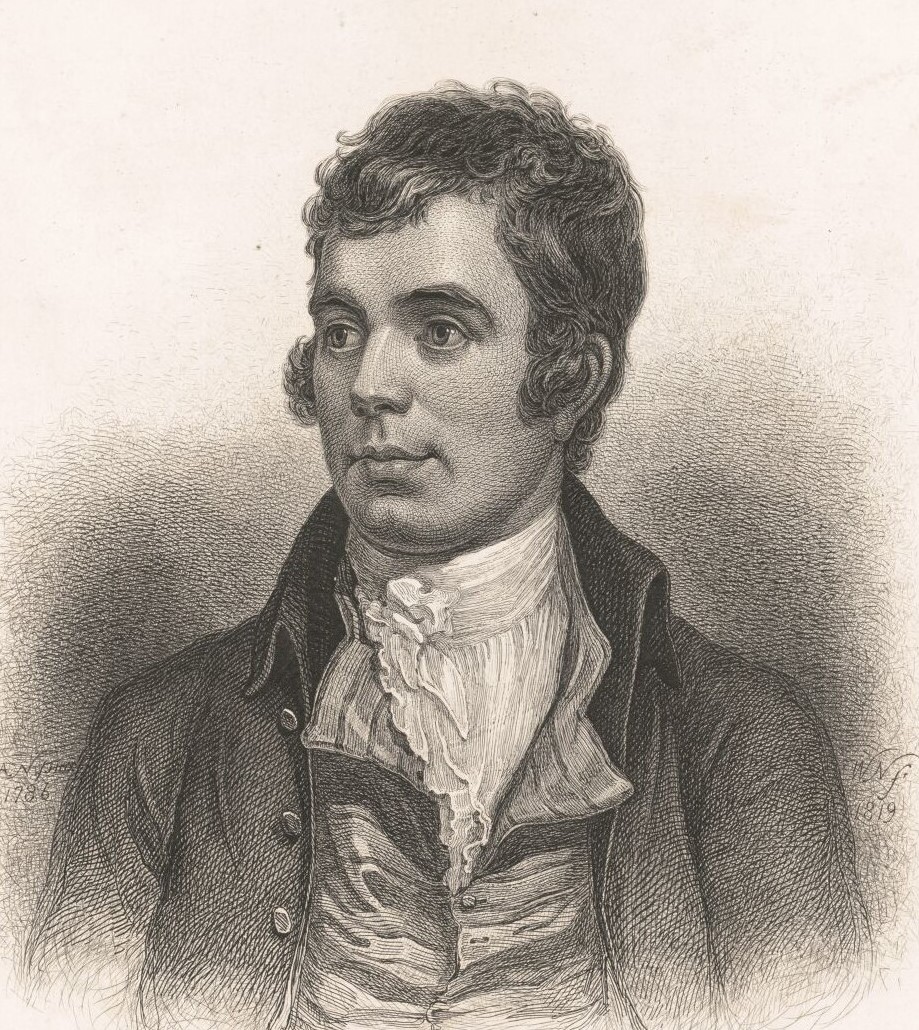
Yesterday we were celebrating the life of Robert Burns, also known as Rabbie Burns, poet and lyricist, widely regarded as Scotland’s national poet and a key figure in Romanticism. Born 25 January in 1759 in Alloway, Ayrshire, Burns came from a farming life to compose enduring works in Scots and English.

Burns was a rebel against the social order and a bitter satirist of all forms of political and religious ideas. Despite his upbringing he was by no means an illiterate peasant. He was a craftsman. Around age 26 his poetry output expanded as he sought to express more of his emotions and comment on the social scene. He has been described as someone of great intellectual energy and force of character.

Burns’ first significant recognition came in 1786 with the publication of his debut poetry collection, Poems, Chiefly in the Scottish Dialect. It was an instant success, earning him fame as the ‘ploughman poet’. Burns produced some fine poetry, the first of which nearly everyone has heard on numerous occasions: AuldLangSyne but others regularly crop up: To a Mouse, AMan’saManfor A’ That, Scots Wha Hae and Tam O’Shanter.

The latter was the only poem he wrote after his time in Edinburgh that showed a hidden side of his poetic genius. Written in 1790, it’s a narrative poem in eight-syllable couplets based on a folk legend. It paints a picture of the drinking classes in the old town of Ayr in the late 18th century, populated by several unforgettable characters including Tam, Souter (Cobbler) Johnnie and his own long-suffering wife, Kate. The tale includes humour, pathos, horror, social comment and some truly exquisite lines. Try and read it in the original before succumbing to the translation – it’s not that difficult.

Burns worked as an excise man and felt it his duty to serve as a private in the Royal Dumfries Volunteers, a local militia formed to defend Britain during the French Revolutionary Wars. He joined the unit in 1795, serving until 1796. Burns produced so much fine poetry that he has become the Scottish national poet. He died in Dumfries, Scotland, in 1796 aged only 37.

No doubt last night there was plenty of Scotch broth, haggis, bagpipes, whisky and, of course, poetry. A life well worth the celebrating.

Comments Off on “Oidhche Bhlas Burns”

Filed under Everyone

Following Black History

You may recall that October was Black History Month. It was a very busy time for publishers and authors, so much so that I’m still waiting for feedback from some of them! However, a trawl through my own library produced three particular books I’d like to share.

The first is Propa Propaganda by the late Benjamin Zephaniah, writer, dub poet, actor and musician as well as professor of poetry and creative writing at Brunel University London. It was a huge loss to the world when he died aged 65 less than a year ago.

Propa Propaganda (Bloodaxe Books 1996) is a few years old now, but right from the start carries the distinctive BZ voice we all came to know. This collection is short treasure, if you’ve never read any of his poems: Terrible World based on Louis Armstrong’s memorable song, White Comedy (I waz whitemailed/ By a white witch,/Wiz white magic), De Queen an I and his three part Acts of Parliament which loses nothing with time and could have been written yesterday!

Acknowledging Black Authors: A couple of years ago I met Garfield Robinson at an event and spent some time talking about the work of black authors, poets, songwriters, all types of storytellers.

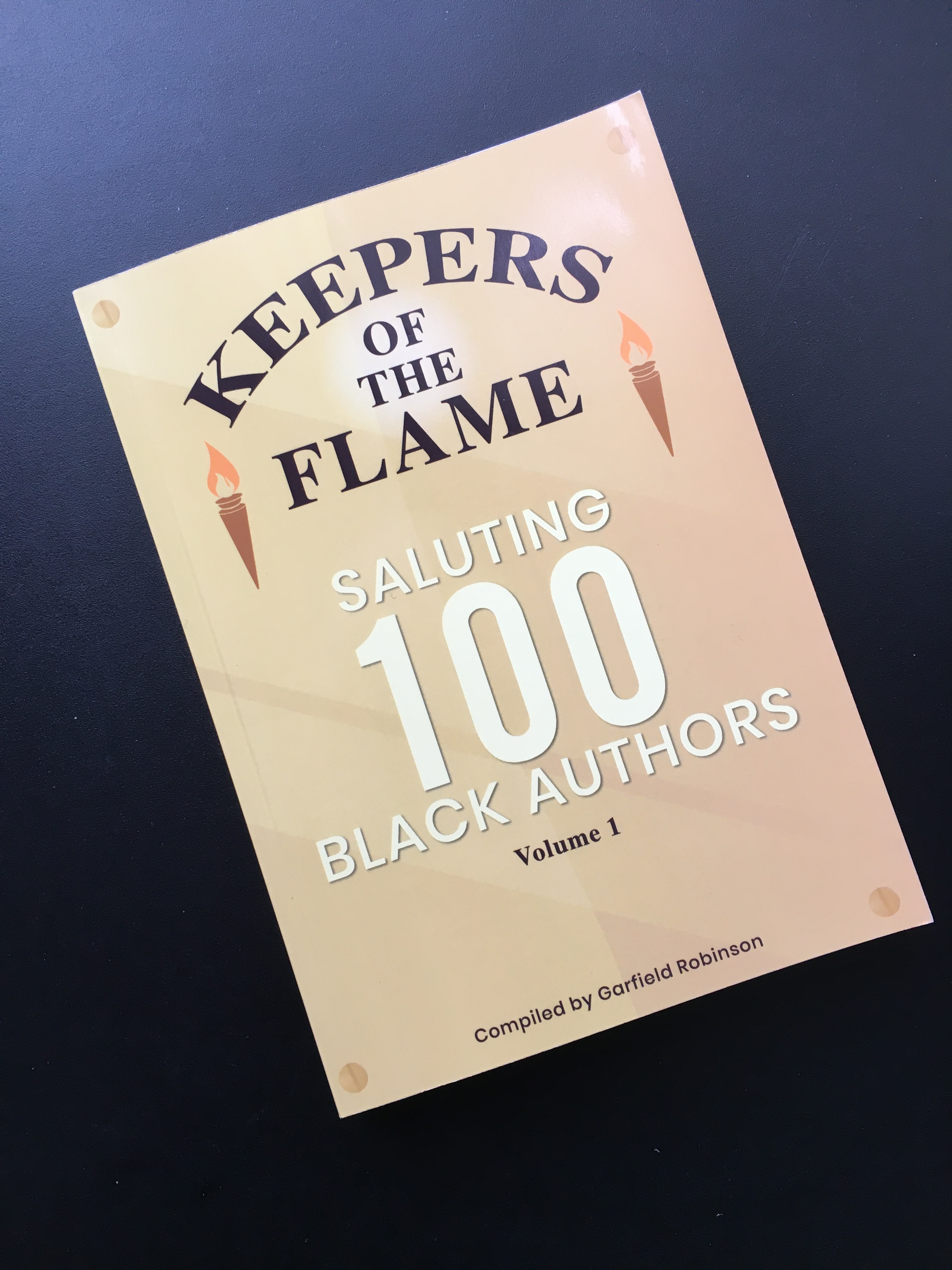
His book Keepers of the Flame (POH Books, 2022) is an excellent collection saluting the work of 100 Black authors – all the way from Shirley Anstis, a mental health counsellor, to Lyndon Wissart a professional chef. Every one of the hundred has a story to tell – inspirational, heart-warming, inquisitive, passionate. The illustrations, printed like engravings or woodcuts, provide an image to accompany the voice explaining their reasons for writing. Some writers you may know, many you will not.

If you want to investigate further, this is the place to start. A ready-made reference compile by Garfield Robinson – bookseller, author and publisher.


My third choice is The Perseverance by British-Jamaican poet Raymond Antrobus. I had the pleasure of interviewing Raymond back in 2019 at the London Book Fair, where he was performing readings from this debut collection.

Beginning with his deafness he merges masculinity, race his mother’s dementia and his father’s death – with a lot of focus on his father. There’s a wonderful series of poems ‘Samantha’ based on an interview he did with a deaf Jamaican woman about her arrival in England. As we might expect his own deafness and communication, his identity (Jamaican British or Jamaican, British? choose) run throughout these poems.

The Perseverance is published by Penned in the Margins 2018.

That’s just a small but belated contribution to Black History month. All well worth a read.

Comments Off on Following Black History

Filed under Everyone