
Or if you’re an inveterate sassenach ‘Happy Burns Night’. So, if you had a good one last night that’s great, because I spent my Burns night fighting a series of ‘server errors’ which is why I’m 24 hours behind – and NO WHISKY!
Yesterday we were celebrating the life of Robert Burns, also known as Rabbie Burns, poet and lyricist, widely regarded as Scotland’s national poet and a key figure in Romanticism. Born 25 January in 1759 in Alloway, Ayrshire, Burns came from a farming life to compose enduring works in Scots and English.
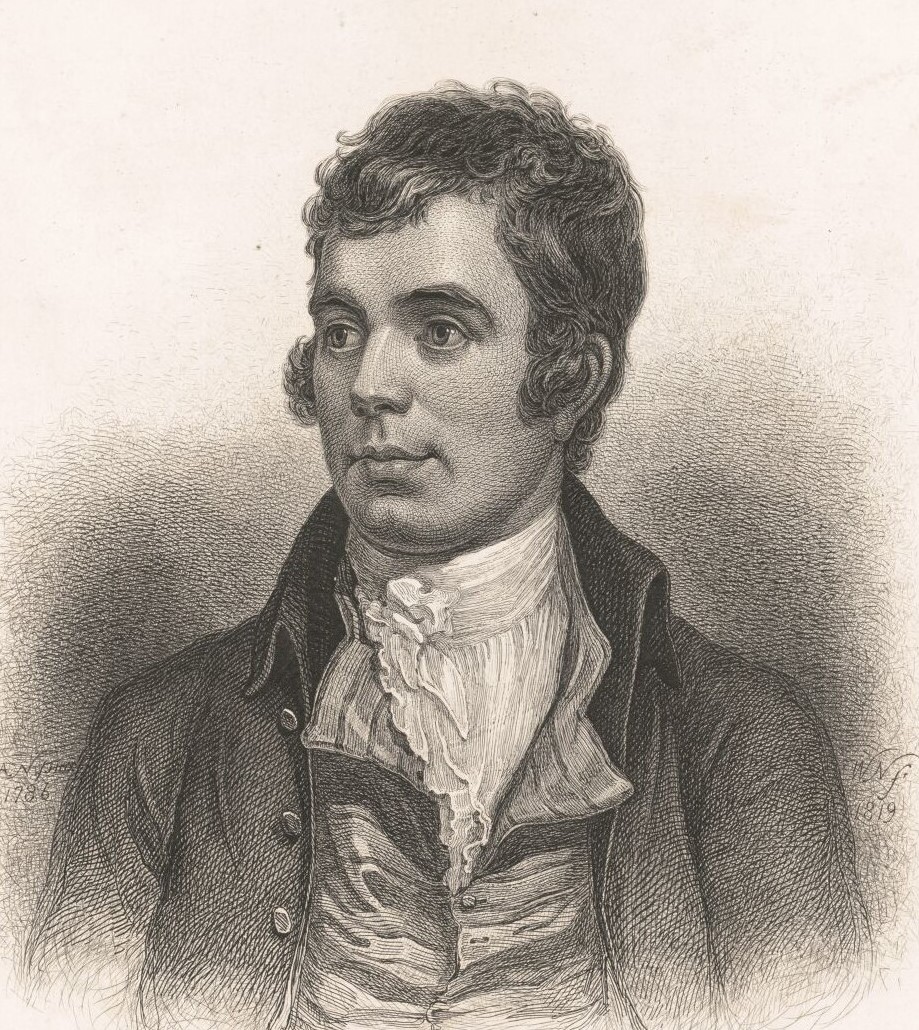
Burns was a rebel against the social order and a bitter satirist of all forms of political and religious ideas. Despite his upbringing he was by no means an illiterate peasant. He was a craftsman. Around age 26 his poetry output expanded as he sought to express more of his emotions and comment on the social scene. He has been described as someone of great intellectual energy and force of character.
Burns’ first significant recognition came in 1786 with the publication of his debut poetry collection, Poems, Chiefly in the Scottish Dialect. It was an instant success, earning him fame as the ‘ploughman poet’. Burns produced some fine poetry, the first of which nearly everyone has heard on numerous occasions: AuldLangSyne but others regularly crop up: To a Mouse, AMan’saManfor A’ That, Scots Wha Hae and Tam O’Shanter.
The latter was the only poem he wrote after his time in Edinburgh that showed a hidden side of his poetic genius. Written in 1790, it’s a narrative poem in eight-syllable couplets based on a folk legend. It paints a picture of the drinking classes in the old town of Ayr in the late 18th century, populated by several unforgettable characters including Tam, Souter (Cobbler) Johnnie and his own long-suffering wife, Kate. The tale includes humour, pathos, horror, social comment and some truly exquisite lines. Try and read it in the original before succumbing to the translation – it’s not that difficult.
Burns worked as an excise man and felt it his duty to serve as a private in the Royal Dumfries Volunteers, a local militia formed to defend Britain during the French Revolutionary Wars. He joined the unit in 1795, serving until 1796. Burns produced so much fine poetry that he has become the Scottish national poet. He died in Dumfries, Scotland, in 1796 aged only 37.
No doubt last night there was plenty of Scotch broth, haggis, bagpipes, whisky and, of course, poetry. A life well worth the celebrating.




 deilibri