Tag Archives: books

Happy Birthday Jane!

Today (16 December) is the birthday of one of our most famous and best loved novelist, Jane Austen, and marks her 250th anniversary.

Celebrations have been going on for weeks with book promotions, film, TV series, audio dramatisations, podcasts and online discussions, so it would be very hard to have not heard about her, or her work.

Jane Austen was born in 1775 in Steventon, Hampshire. From as early as 11 years old she wrote stories and poems for herself and to amuse her family. Although she wrote novels before she was 22 none of her work was published until she was 35 and even then they were anonymous. These were Sense and Sensibility (1811), Pride and Prejudice (1813), Mansfield Park (1814), and Emma (1816). All had moderate successes, but didn’t bring her fame in her lifetime.

She wrote two other novels — Northanger Abbey and Persuasion, published posthumously in 1817. She began another, Sanditon, unfinished on her death. There were three manuscript volumes of juvenile writings, the short epistolary novel Lady Susan, and the unfinished novel The Watsons. Since her death Austen’s novels have rarely been out of print.

In the months after her death in July 1817, Cassandra Austen, Henry Austen and Murray arranged for the publication of Persuasion and Northanger Abbey as a set. Henry Austen contributed a Biographical Note dated December 1817, in which he identified his sister as the author of the novels. Sales were good for a year.

So check the list below. What have you read – not seen on TV/film or listen to, but actually read!

  • Mansfield Park (1983)
  • Northanger Abbey (1987)
  • Pride & Prejudice (1995) a wonderful series with Colin Firth & Jennifer Ehle
  • Sense & Sensibility (2008)
  • Emma (2009)

All available on BBC iPlayer. BBC 4Extra have been serialising Lady Susan, written in 1794, as a series of letters from the widowed Lady Susan Vernon as she schemes her way through high society looking for a suitable (and profitable) husband. This novella wasn’t published until 1871.
Comments Off on Happy Birthday Jane!

Filed under Everyone

Then there were two

I began writing this piece, last week, about the very sad and totally unexpected death of Sophie Kinsella, only to be shocked again to learn of the sudden demise of Joanna Trollope, one day later!

Sophie Kinsella died on 10 December, aged 55, just two days before her 56th birthday. In 2022 she was diagnosed with glioblastoma, an aggressive form of brain cancer, for which she underwent neurosurgery.

Her first novel was published in 1995 under her married name Madeleine Wickham. Following her decision to forgo the thrills of financial journalism, she turned to fiction writing. Her death is a huge loss to the literary world and to all her millions of readers who followed her main protagonist Becky Bloomwood – a financial journalist with a serious shopping addiction. Beginning with Confessions of a Shopaholic’ in 2000, through to Christmas Shopaholic in 2019, her books (34 novels in 30 years) have sold over 50 million copies with themes such as love, self discovery, relationships and, of course, shopping.

Joanna Trollope sadly passed away on the 11 December two days after her birthday, she was 82.

Starting out as civil servant and then a teacher, Joanna turned to full-time writing in 1980. Despite her family connections to Victorian novelist Anthony Trollope, she believed it hadn’t helped her at all in her professional life. She also wrote under the pen name, Caroline Harvey.

Joanna began writing historical fiction before converting to contemporary novels. Because of their more traditional, provincial themes they were labelled by one novelist as ‘aga sagas’ – a term she disliked since her stories were anything but cosy. She produced a huge body of work from her historical novel Eliza Stanhope in 1981,through to Mum & Dad in 2020. As one reviewer summed it up ‘Nobody writes about family tensions better than Joanna Trollope’.

We have lost two outstanding writers in the space of two days. A tragic loss to the literary world and to their families, especially at this time.

Comments Off on Then there were two

Filed under Readers

“Four legs good, two legs bad.”

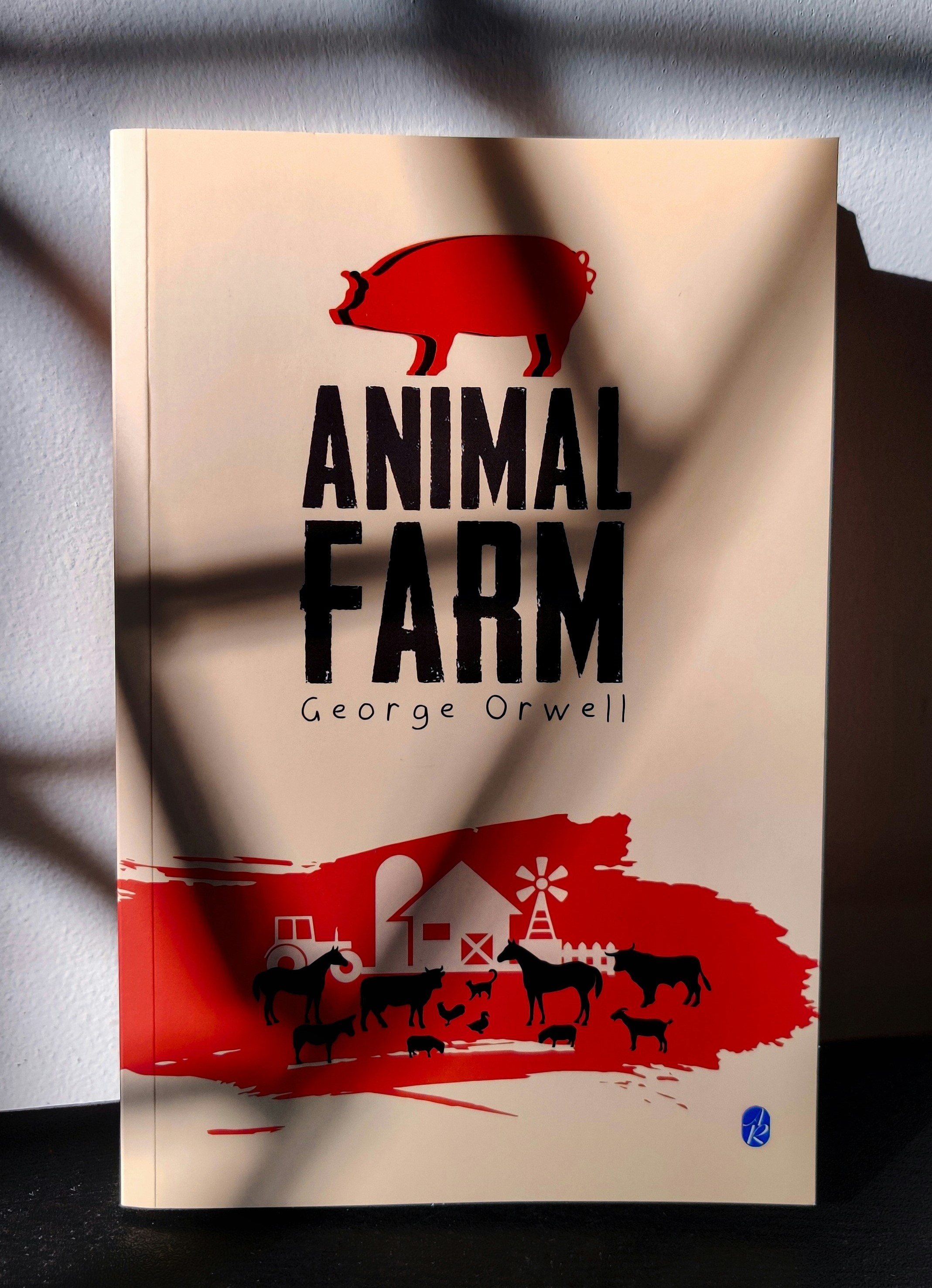
In 1945, writer Eric Blair had his novel published by Secker & Warburg. The novel, originally subtitled as ‘a fairy story’, was a satirical allegory following the antics of a group of anthropomorphic farm animals. August 17 marks 80 years since its publication. The novel is, of course, Animal Farm, by George Orwell (1903-1950).

Orwell, journalist, novelist and poet, opposed totalitarianism in all its forms – facism, communism, etc. (look around for plenty of current examples). In the fictional Manor Farm, the animals rebel against the farmer and take over the business, hoping to give themselves a better, freer, more relaxed existence. All goes well until the pigs start taking the lead, with a particularly nasty specimen, Napoleon, heading the field. The result is bigger mess than when they started, but of course the pigs know better.

Orwell says that it was the first book in which he intended to fuse artistic and political purpose. An aim he achieved with enormous success.

Picture: S. Agrawal

Animal Farm has become a huge commercial and international success. There are a large number of animated versions to choose from as well as print and digital editions. I treasure a much read, early 1960s copy, in the distinctive orange of publishers Penguin, now squirreled away in my archives. Time magazine chose in as one of the 100 best English language novels and in a 2003 BBC poll it reached No. 46.

This is a definite must read and I’m always surprised by the number of people who recognise the quotes but have never opened the book. And the headline? It’s a quote from Snowball, one of the key pigs – loosely based on Leon Trotsky. Snowball is intelligent and full of ideas about education and improvements on the farm, which makes him a target for Napoleon. Predictably, he’s chased off the farm of course.

Comments Off on “Four legs good, two legs bad.”

Filed under Everyone