Tag Archives: fiction

Some books are really ‘smart’

During my visit to the 2025 London Book fair I can across a very small stand located at the rear of the main hall. The company was Peasoup and it was manned by two Danish guys, Soren Jonsson and Kristian Dreino – perhaps two of the nicest people you would wish to meet.
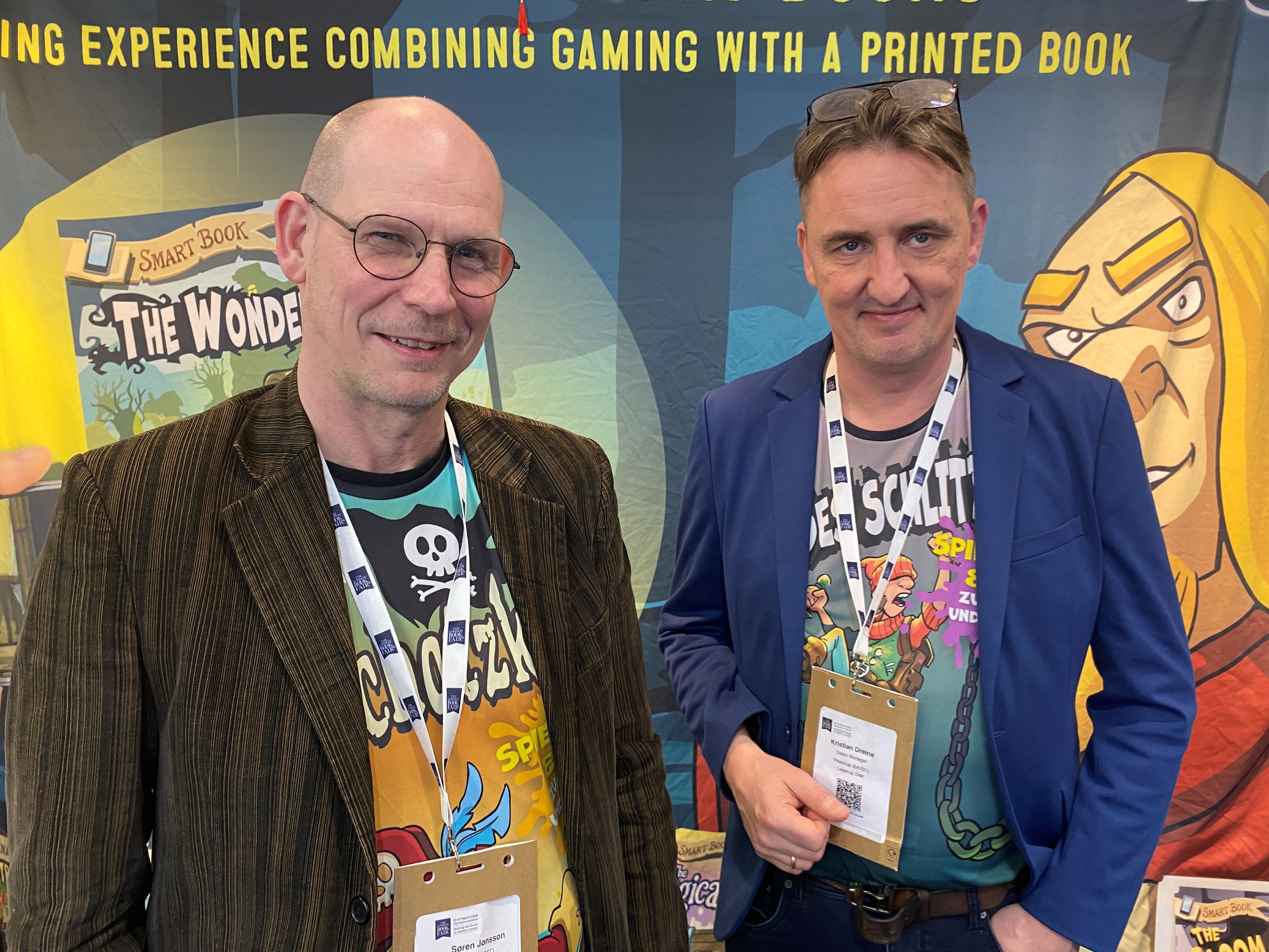
Soren Jonsson & Kristian Dreino

They were promoting their colourful game books, but game books with a difference. Maybe you recall the type of book (usual a handy size paperback) were you are given a persona, or could choose one, before setting out on a quest.

I remember my first ones were I had to choose a page number to visit. There I would be given a task to complete, or a decision to be made. Whichever I chose I would suffer the inevitable dire, and usually fatal, consequences!

Peasoup’s books are different. They feature Augmented Reality (AR), a technology that integrates computer-generated content, such as video or audio, into the reader’s environment, in real time. Not to be confused with VR (virtual reality) which is a fully digital. With the Peasoup books, this is achieved via an easy down-loadable app.
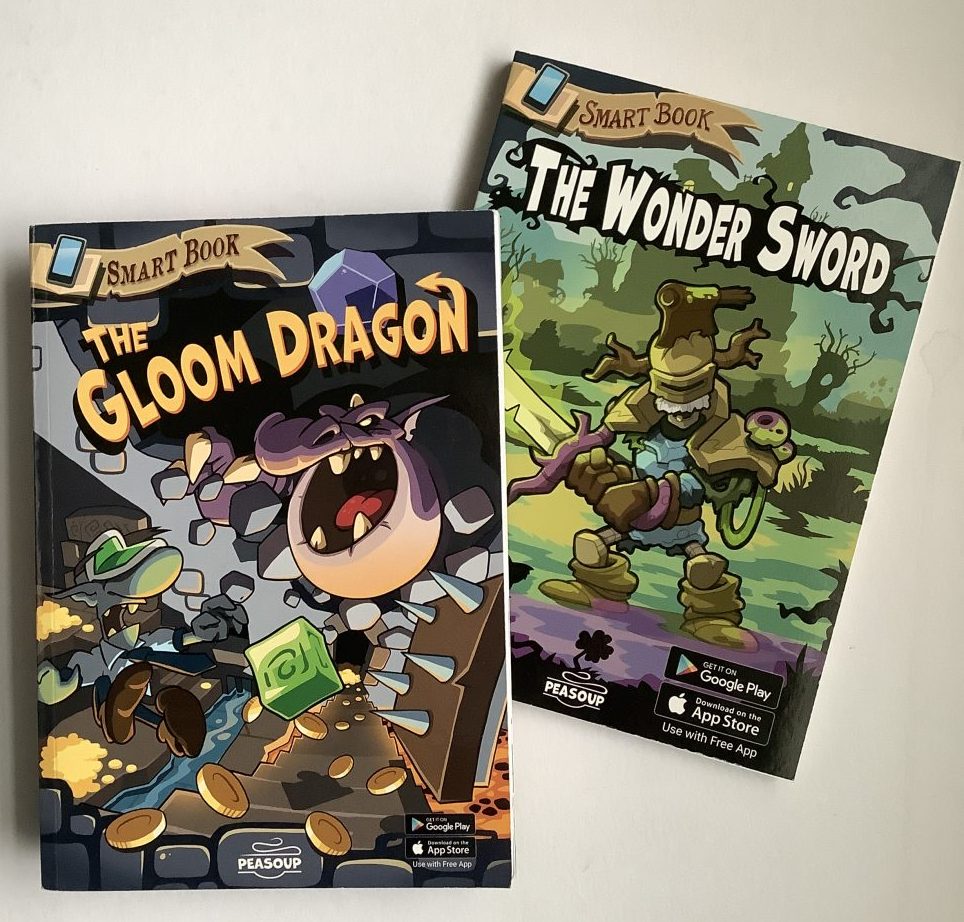
So the reader starts the adventure, visits the designated page where they find a scannable illustration. Here they use their smartphone camera via the app to discover what awaits them. Each book has its own app from eithe Google Play or the App Store.

My first copy of the the books (pictured right) featured fold-down covers, so the book would lie flat. This was a great help with the phone – although this facility singularly failed to prevent me from getting wasted by the waiting ogre, in a very short time!

Peasoup began 7 years ago, but the team behind it have been involved with computer games design for younger players for over 25 years. Illiteracy is a growing problem among children (just look at the figures in the UK), so innovation is needed to motivate reluctant readers at school and home. They discovered that children in the 10-14 years range, in Denmark, were reading less and less. The link between the traditional fantasy games and AR meant the images could divert reader’s attention and the books would provide more experience of reading and maths – making it more fun.
Danish children liked the books. Slow readers in the 8-10 group, who find it hard, can scan the text too. While small game elements can help kids be in their own space, such as with autism sufferers, which keeps them reading.

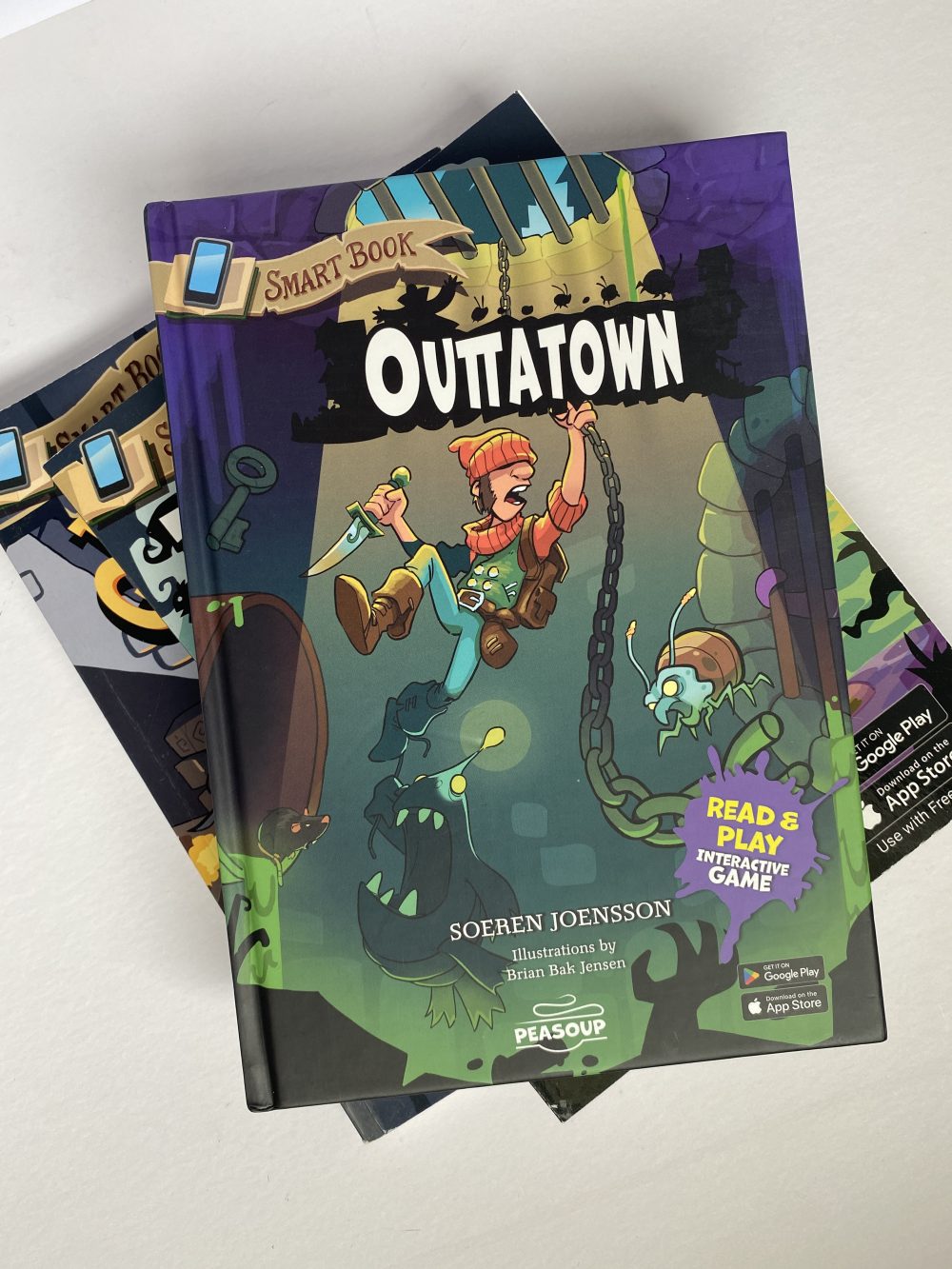
At this years’ London Book Fair, I found the same stand and the same two guys, this time with a spectacular new book in the series, Outtatown. Written by Soren Jonsson and lavishly illustrated by Brian Bak Jensen, it’s a standalone book, like the rest of the series. Readers, in this case aged 9+, need the Outtatown app too – this can’t be used alone.

“In Outtatown, you join a secret society of daring and resourceful adventurers calles the Tricksters. Use your street savvy and take daring risks to free the city of Outtatown from the reign of the terrible Bug King, who controls the minds of his innocent citizens..”

A report in Denmark suggests that: ‘the books can be used either with a single child or in a group, both ways work with no problems at all, and there is no better way of reading to book. It is excellent for all who can read. That’s why it is difficult to put a age group on the book, simply because the difference between children who are good at reading is really big in the 7-10 year age group. But when the children are reading in a group, they read together, and the best skilled child reads and that creates a dynamic group’.
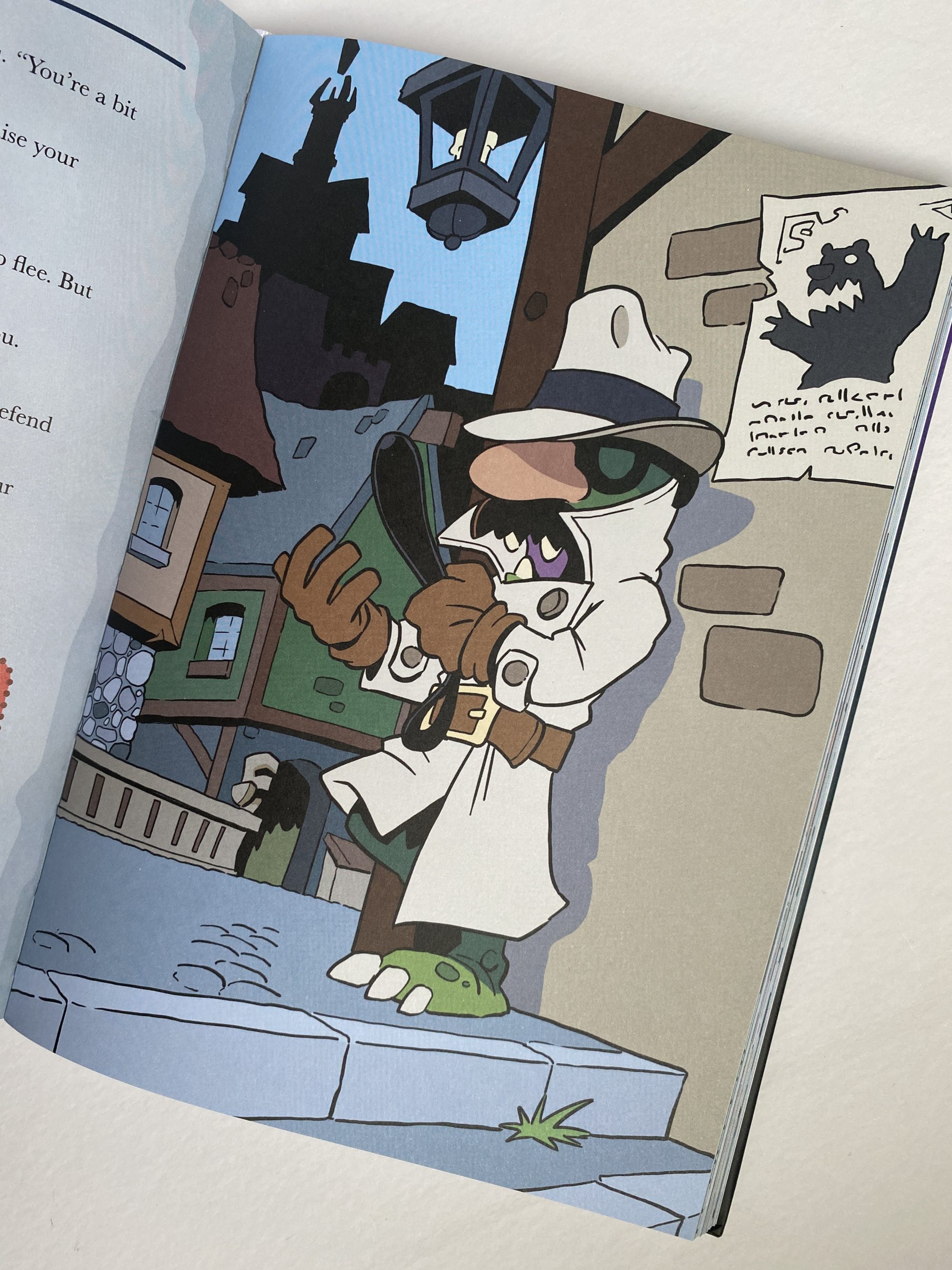
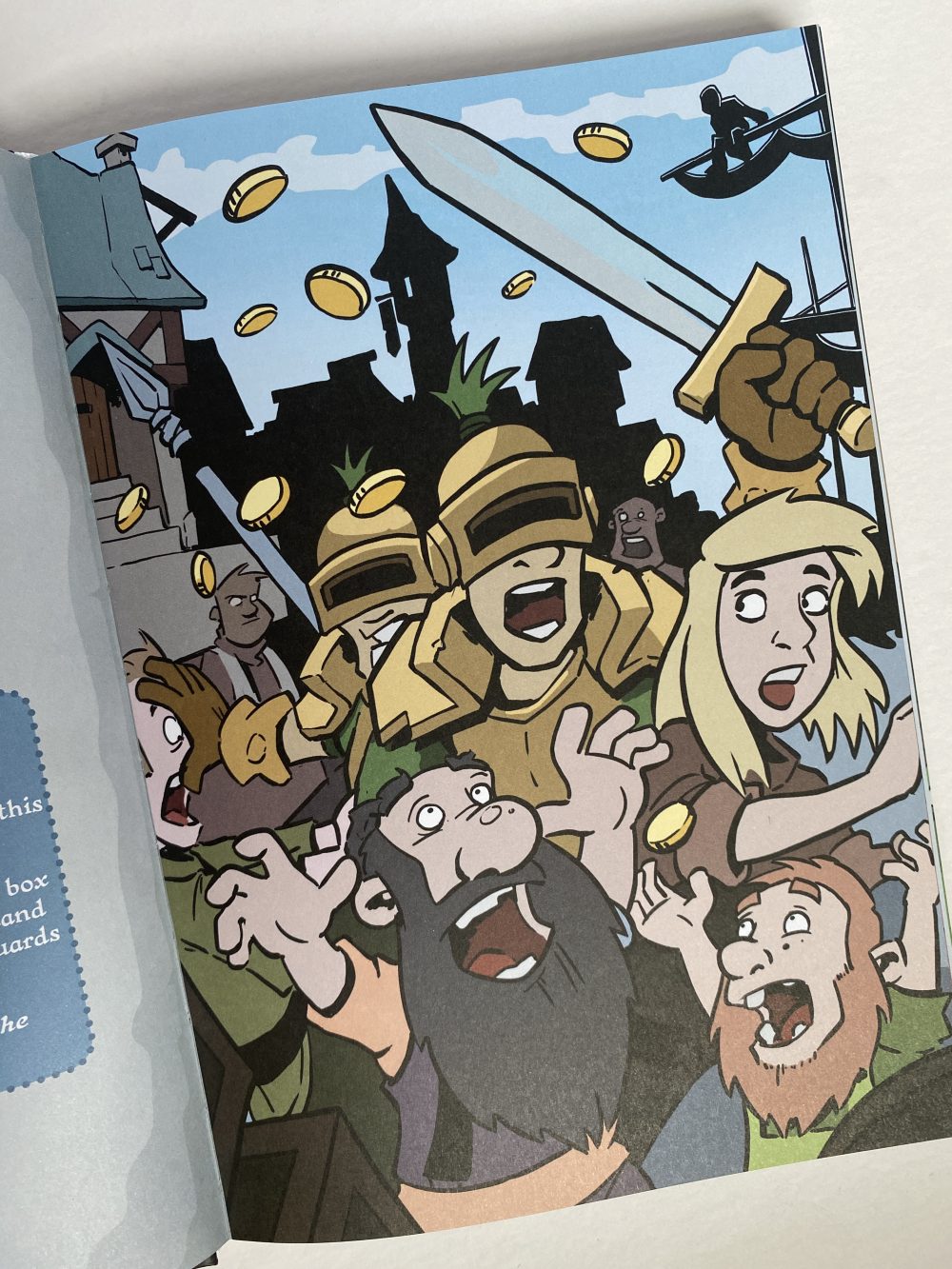
They summarised by saying that the reading experience is for everyone who appreciates the “Choose your own adventure” genre, and is really genuinely fun – even for the adult co-reader.

Peasoup can be found at at www.peasoup.dk. More plans are in the pipeline to extend the range of titles which I’ll be covering in due course.
Leave a comment

Filed under Everyone

Then there were two

I began writing this piece, last week, about the very sad and totally unexpected death of Sophie Kinsella, only to be shocked again to learn of the sudden demise of Joanna Trollope, one day later!

Sophie Kinsella died on 10 December, aged 55, just two days before her 56th birthday. In 2022 she was diagnosed with glioblastoma, an aggressive form of brain cancer, for which she underwent neurosurgery.

Her first novel was published in 1995 under her married name Madeleine Wickham. Following her decision to forgo the thrills of financial journalism, she turned to fiction writing. Her death is a huge loss to the literary world and to all her millions of readers who followed her main protagonist Becky Bloomwood – a financial journalist with a serious shopping addiction. Beginning with Confessions of a Shopaholic’ in 2000, through to Christmas Shopaholic in 2019, her books (34 novels in 30 years) have sold over 50 million copies with themes such as love, self discovery, relationships and, of course, shopping.

Joanna Trollope sadly passed away on the 11 December two days after her birthday, she was 82.

Starting out as civil servant and then a teacher, Joanna turned to full-time writing in 1980. Despite her family connections to Victorian novelist Anthony Trollope, she believed it hadn’t helped her at all in her professional life. She also wrote under the pen name, Caroline Harvey.

Joanna began writing historical fiction before converting to contemporary novels. Because of their more traditional, provincial themes they were labelled by one novelist as ‘aga sagas’ – a term she disliked since her stories were anything but cosy. She produced a huge body of work from her historical novel Eliza Stanhope in 1981,through to Mum & Dad in 2020. As one reviewer summed it up ‘Nobody writes about family tensions better than Joanna Trollope’.

We have lost two outstanding writers in the space of two days. A tragic loss to the literary world and to their families, especially at this time.

Comments Off on Then there were two

Filed under Readers

6 Quick Reads for World Book Night

World Book Night is almost here. Don’t know what this is or confusing it with World Book Day? Well you’re not alone. According to my local book store ‘it finished weeks ago’ — no that’s the one where kids dress up as their favourite character, but don’t read books!

Well next week, Wednesday 23 April, is definitely World Book Night brought to us courtesy of The Reading Agency. It began in 2011, but was moved to this date to coincide with UNESCO International Day of the Book and, probably, the birth and death date of William Shakespeare.

This year The Reading Agency has released 6 Quick Reads — short books and great stories by bestselling authors, written in an accessible and easy to read style. They’re a valuable tool for boosting reading skills, confidence and engagement in learning, and have led to thousands of adults reading, completing and enjoying a book for the first time.

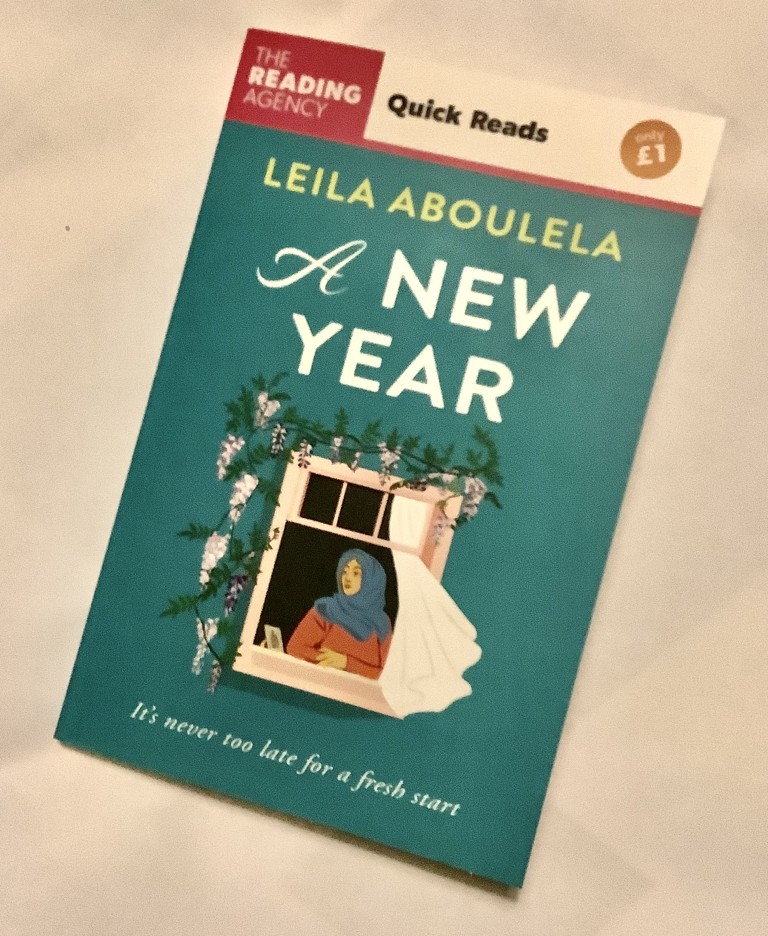
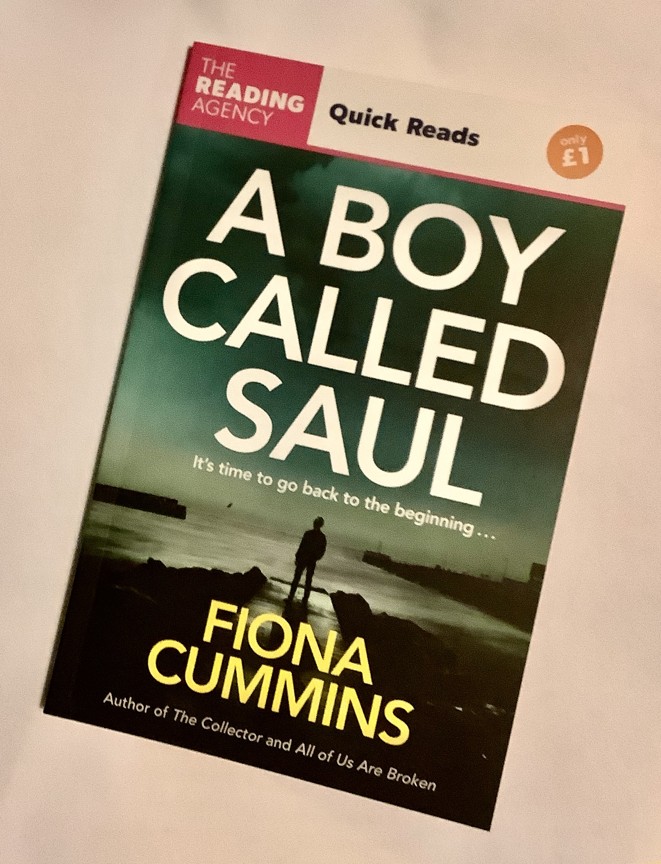
Just to add to my own huge pile of ‘reads’ I’ve completed two of the titles: Leila Aboulela’s A New Year and Fiona Cummins A Boy Called Saul.

Leila’s story follows the recently widowed Suad as she begins to try and transform her life. Family support turns to family grievances — a theme that must be echoed across the nation and familiar to many tv viewers. Will the kids rally round, or leave her to stew on her own?

I wasn’t sure about A Boy Called Saul until I read the opening line: ‘Saul Anguish hated the police.’ Now I was hooked — as I’m supposed to be. How can you ignore someone with the name Anguish or even a police office called Storm.

These are both less than 115 pages, so easily digested in one sitting. I’ve another four to go so I’ll keep you posted. In the meantime, check out the site for more info.

NB: My local library has the biggest selection of Quick Reads I’ve ever seen, housed in a separate bookcase. They haven’t heard of WBN either!

Comments Off on 6 Quick Reads for World Book Night

Filed under Everyone